Ultra Ethernet#
Netnod Tech Meeting 2025 digest Program Core pick 9 October 2025
Johan Ervenius — Arista Networks (Systems Engineer)
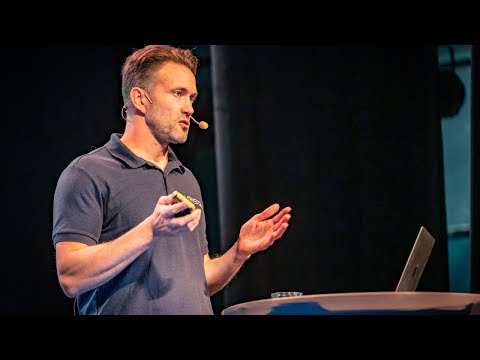
- Why: The AI/HPC fabric problem — how to carry RDMA-like traffic at scale without RoCEv2's lossless-network crutches — is squarely in the PM's lossless-fabric/DC interconnect territory, and UEC 1.0 is the standards answer the whole industry is converging on.
- What: A technical walkthrough of the Ultra Ethernet Consortium specification (~500 pages, >100 member companies) and its transport (UET). The core finding: flow-based ECMP hashing degrades badly with few large flows — the slide deck quantifies 32 servers with 8×10 Gbps flows each achieving only ~71% worst-case efficiency on 32 uplinks, versus 99.98% when traffic is packet-sprayed 204 ways. UET is designed so spraying works: packets carry their ultimate destination memory location so out-of-order packets go straight into posted buffers.
- How: Key mechanisms: (1) out-of-order-capable RMA transport so one flow can use all paths; (2) packet trimming — switches truncate to 64 bytes and DSCP-mark "trimmed" instead of dropping, giving a fast congestion/loss signal; (3) sender-based Network Signal Congestion Control using delay, ECN and trimming together, plus an optional receiver-credit mode for incast (VOQ-like); (4) link-layer retransmission (ACK/NACK via 802.3 OCodes, negotiated via LLDP) to improve tail latency in pods with 256K–512K transceivers; (5) libfabric 2.0 as the application API.
- Where applicable: Standards-track and multi-vendor rather than Arista-proprietary, so broadly relevant to any Ethernet AI fabric planning. But UET requires new NIC and switch silicon — nothing here deploys on a RoCE fleet today. The efficiency numbers are the speaker's own modeling, not an independent benchmark.